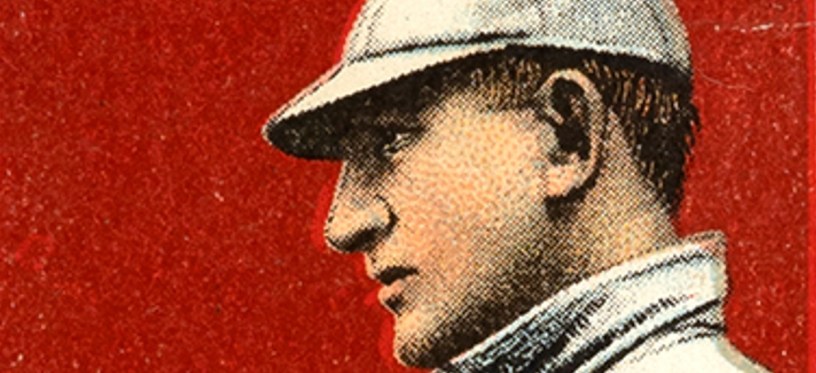
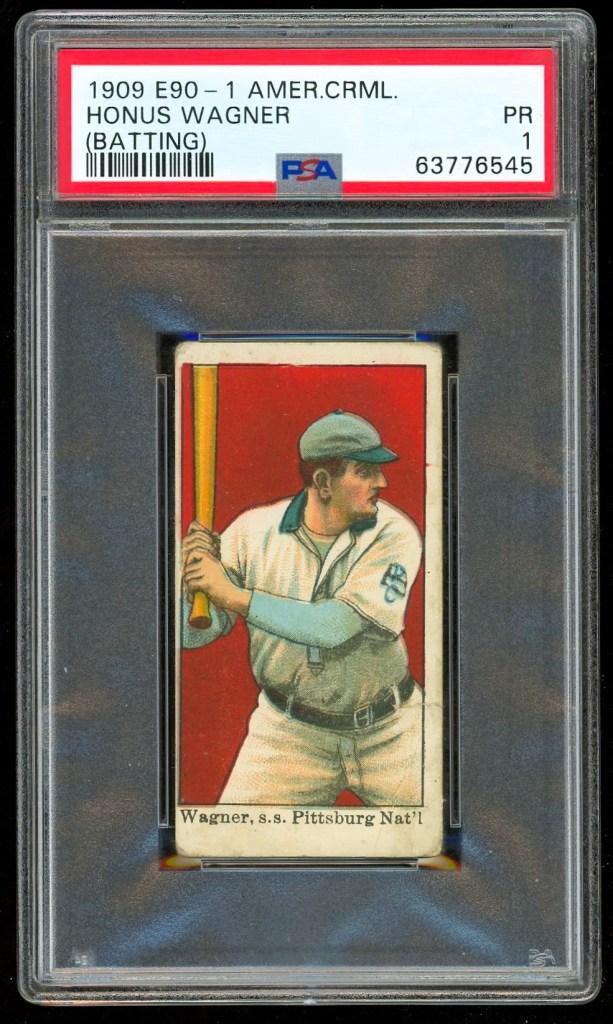
 I was reminded of a checklist of 1909-11 E90-1 American Caramel cards recently that was part of a Card Collectors Bulletin publication put together by Jefferson Burdick. Burdick, of course, is famous as the author, so to speak, of the American Card Catalog.
If you’ve got a copy of his American Card Catalog, you might see varying information of what Burdick has in the book. That’s because there are several variations as it was printed and updated a few times.
In my version (1960), Burdick indicated there were 111 different cards that he had seen in the set. But in the Card Collectors Bulletin issued years earlier, Burdick’s checklist included only 100 cards. Burdick never seemingly saw the true amount, which is up to 121 cards these days (122 if you want to count a minor punctuation difference on one of Willie Keeler’s cards).
E90-1 American Caramel is one of my favorite baseball sets. I’ve collected all of the cards except for the biggest — Shoeless Joe Jackson’s rookie. About two years ago, I was content enough to call it a day after I landed the second of Honus Wagner’s two cards.
Jefferson Burdick’s 100-card Checklist
About a year and a half ago, you might recall that I looked at Burdick’s incomplete checklist on E90-1 and E91 briefly. But I never bothered to fully dive into either list and had completely forgotten about the CCB data that I’d seen years ago. I simply stumbled upon it again just recently. That data, by the way, comes courtesy of a post that collector David Kathman made from the Net54 website nearly a decade ago. It included images of the original 100-card checklist, that you’ll find in his post at that link.
What I’m interested in here are the 21 cards that Burdick hadn’t yet seen when he put together his initial checklist. In particular, I wanted to see if the 21 cards he didn’t know about corresponded to the ones that we consider as particularly rare in the set today. I fully expected they did and, unsurprisingly, most are quite rare. But there were also some surprises.
Let’s take a look at the 21 cards that were missing from Burdick’s initial checklist.
 True Shortprints
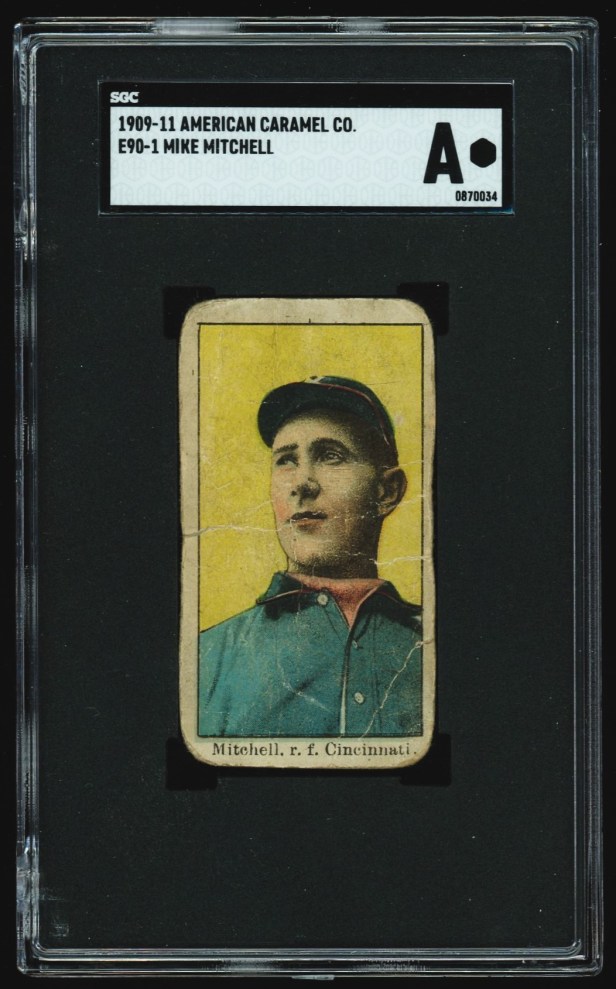
Harry Bemis, Bob Bescher, Patsy Dougherty, Addie Joss (horizontal), Hans Lobert, Larry McLean, Dots Miller (sunset), Mike Mitchell, Dave Shean, Jake Stahl, Bill Sweeney, Ed Walsh, Cy Young (Cleveland)
None of these really surprise me. Bob Bescher has not seemed quite as rare to me as others, but these are generally all tough cards to find. Some are much harder than others but I don’t have much of an issue calling these cards shortprints. And cards like Mitchell and Sweeney have long since been considered among the most difficult cards in the set to find. Given they were not star players only would have pushed them off the radar even farther. In recent years, Stahl has also gained the reputation of being one of the hardest.
While the jury is still somewhat out on Dots Miller’s sunset card since that variation was only discovered in 2012, it’s also been nearly 15 years since then. Savvy pre-war collectors know about it by now and it still isn’t showing up in large quantities. That tells me it is every bit the shortprint that others in this list are.
On the Fence
Fred Clarke (Correction), Wally Clement, George Davis, Lew Richie
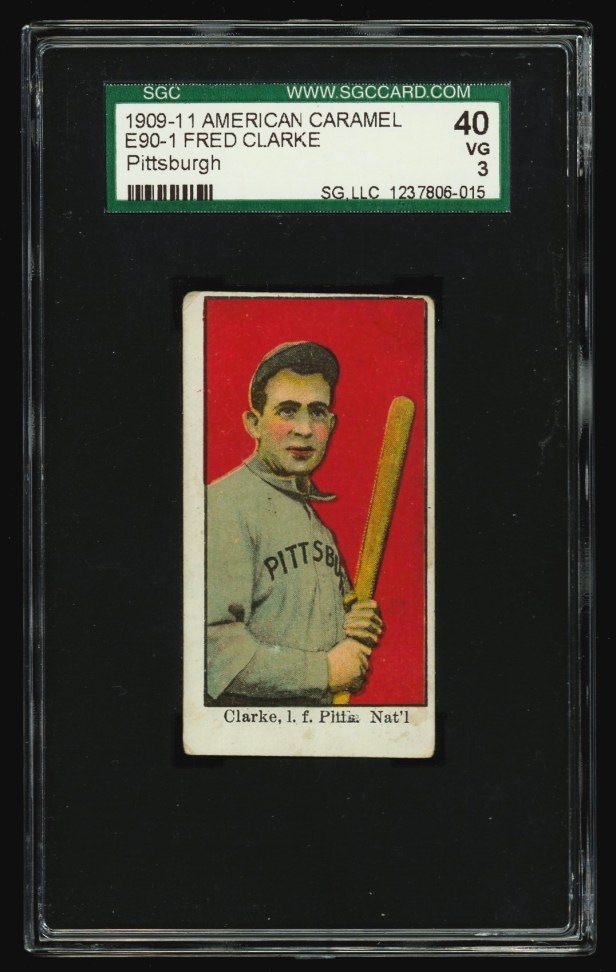
Fred Clarke’s correction (where American Caramel merely overprinted Pitts. over the previously incorrect team designation of Phila.) is tougher than his error card. But calling it a true shortprint is probably off. Because the change was so minor, I wouldn’t be surprised if Burdick saw the corrected card and simply paid no attention to it, just assuming he had already checklisted it.
Clement and Davis are different cases. Both are certainly tougher cards. Trust me — I realize that in trying to upgrade the pair that I currently have in my set. But I’ve also seen them enough that I don’t really put them in the true shortprint category, either. Davis has been graded by PSA nearly 50 times and Clement is up over 30. A lot of the shortprint commons are closer to the 15-20 mark.
Richie’s another one in that group. Tougher card but hard to say it’s a true shortprint as you do see enough of them around. A low-grade PSA 1.5 just sold in June on eBay for over $130 so there is demand for it. But true E90-1 shortprint demand? To me, it falls a little short.
In short, these are all slightly tougher cards but I am surprised that Burdick had not seen them before issuing his initial checklist — Clarke being the exception.
Huh?
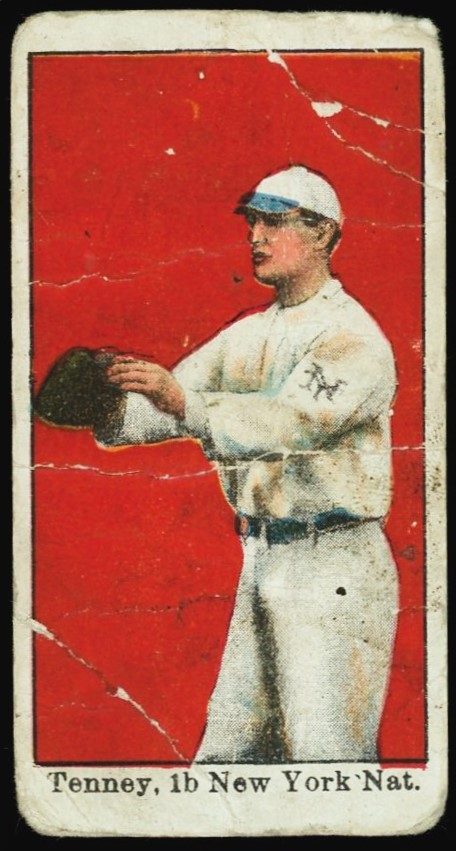
Fred Tenney
I gave Burdick the benefit of the doubt with regards to the last group, but I am even more surprised that he didn’t see a Tenney.
Even as a common, Tenney still has 40 graded PSA copies floating around out there, let alone all of the raw ones, of course. Two recently sold on eBay and there are a whopping nine that are currently listed at the time of this article. That’s got to be among the most for any common from the set on there currently.
Blaming Burdick for shoddy work when he didn’t have use of the internet or even many real card shops around would be silly. But I’m quite surprised he didn’t find someone reporting Tenney to him before his list was completed. We don’t know the 11 new cards that Burdick encountered by the time his last American Card Catalog was issued, but I would be amazed if Tenney was not one of them. It’s just not a rare card, even if mine needs badly upgrading.
I’ve Got Questions
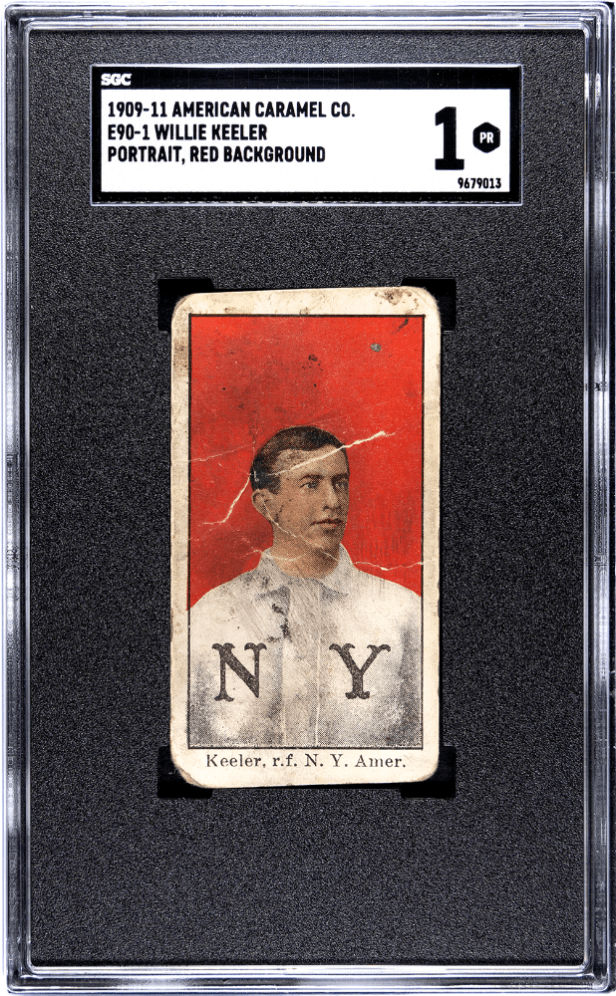
Willie Keeler, George Gibson, Honus Wagner
Three other cards could really use some explanation.
While Burdick had seen a Keeler portrait, he didn’t specify if it was the pink version or the much rarer red version. Logic dictates it was likely the pink background card, but we don’t know for sure. We also don’t know if Burdick perhaps saw both and simply did not think one was a true variation, chalking the background difference up to ink levels in the printer.
Same goes for the missing card of catcher George Gibson. Burdick identified one Gibson in his book but did not specify if it was the more common full body image or the much rarer version showing Gibson’s back.
Finally, it’s a similar story for Honus Wagner. Burdick’s book does not state if it’s the fielding variation or batting card of the Hall of Famer. Both are rare and shortprints, but the throwing card is significantly rarer than the batting pose card.
Conclusions
After I got done identifying the cards he missed, I suppose the conclusion I’ve come up with is that, this just underscored the difficulty in Burdick’s work. Today, E90-1 is one of the most popular caramel card series’ out there. And yet, more than 100 years later, we’re still finding some variations, like the Miller sunset card that was discovered only in recent years.
The other thing that stands out is just the nature of getting lucky with some of this sort of stuff. While many of the cards Burdick had not seen were indeed tough shortprints, he also did see many shortprints of cards that are equally as tough to find or even tougher, such as Peaches Graham, Hugh Duffy, Ed Karger, Jerry Upp, George Stone (hand showing), and Tris Speaker.
At the end of the day, it’s also important to consider the backs of the E90-1 cards, which explicitly state that the checklist included 100 subjects. Once Burdick hit 100 in his own checklist, he likely called it a day — even if he did ultimately discover 111 total cards by the time the 1960 American Card Catalog was printed.
Want more talk about pre-war cards? Follow me on Twitter / X here.

