One of the things I wanted to get back to was posting about cards that I pick up each month. So here’s a look back at new card finds from October.
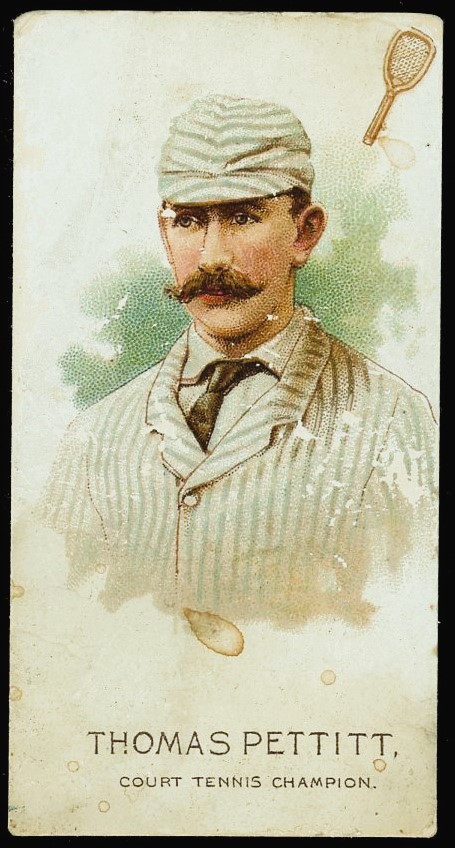 The biggest card of last month also wrapped up one of my favorite sets completed this year — the N29 Allen & Ginter Champions set. That was achieved with this pickup of this card featuring tennis star Tom Pettitt. Pettitt was one of the game’s early stars and is a member of the International Tennis Hall of Fame.
So what made finding a Pettitt card so difficult? For one thing, there is an increased interest in the cards of early tennis players. While pre-war tennis cards in general have not experienced the same sort of demand shifts as seen in other sports (and even in non-sports), the earliest cards depicting players in the sport are becoming heavily sought after.
More importantly, the N29 cards, Allen & Ginter’s second series of champions cards, are much rarer than the first series N28 cards issued a year earlier. Some evidence of that can be seen in population reports. PSA has graded four times as many N28 cards than they have N29 cards. Similarly, N29 cards are much smaller in number on eBay than the N28 cards.
The Petttitt card to close out the N29 set was my most important addition this month because it was the final card needed for a tough set.
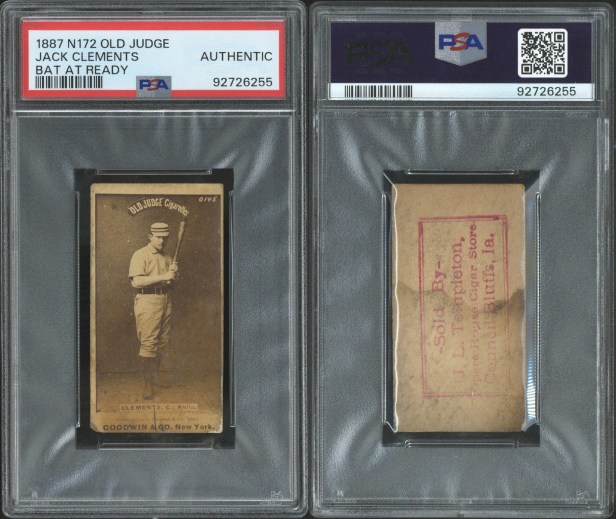
However, my favorite pickup of the month is probably this rare N172 Old Judge card of Tom Clements.
While these 19th century Old Judge cards were printed with blank backs, this one has a rare back advertisement stamped on it. The card would have likely served as an advertisement for J.L. Templeton’s Opera House Cigar Store combination. Templeton not only operated this business, he was a County Fire Department Chief and later, County Marshall.
I purchased this card from Love of the Game’s summer auction and it was the only Old Judge card they’d witnessed with any such back advertisement. And while I am certain that a few others must exist somewhere, I have not seen another prior example, either.
I wrote more about the Clements addition here.
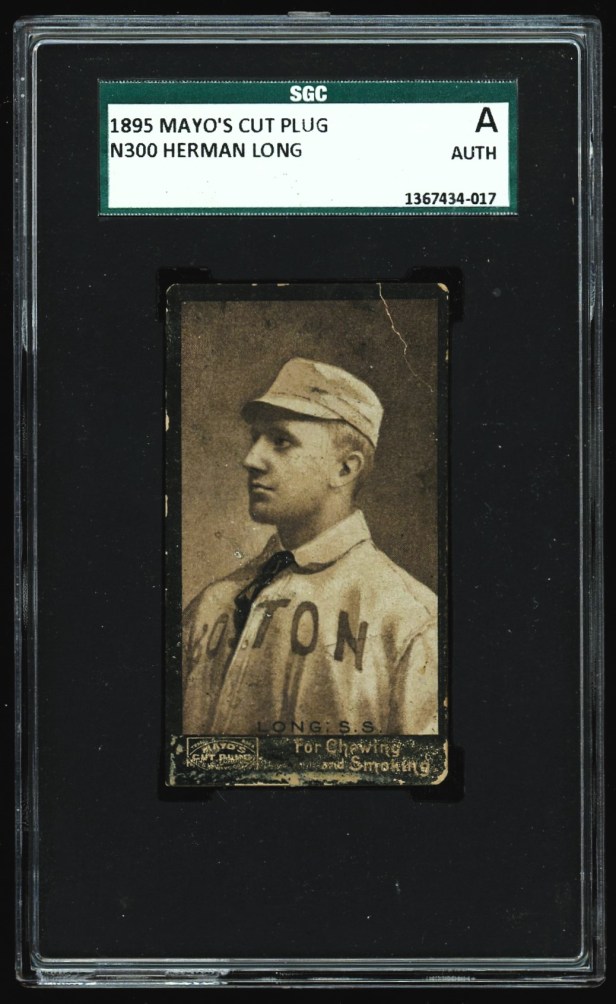 Sticking with 19th century baseball, I also added two more to my slowly-growing 1895 Mayo set.
As I wrote last month, this is a new set I’m going to begin working on. I don’t have any illusions how difficult one of these is to build. But I’m fascinated by the cards enough to give it a shot.
Herman Long was the first 1895 Mayo card I added this month. An underrated hitter in the 19th century, Long batted over .300 four consecutive seasons, including in 1896 when he hit .345.
The other 1895 Mayo baseball card I grabbed was this one of Mike Griffin.
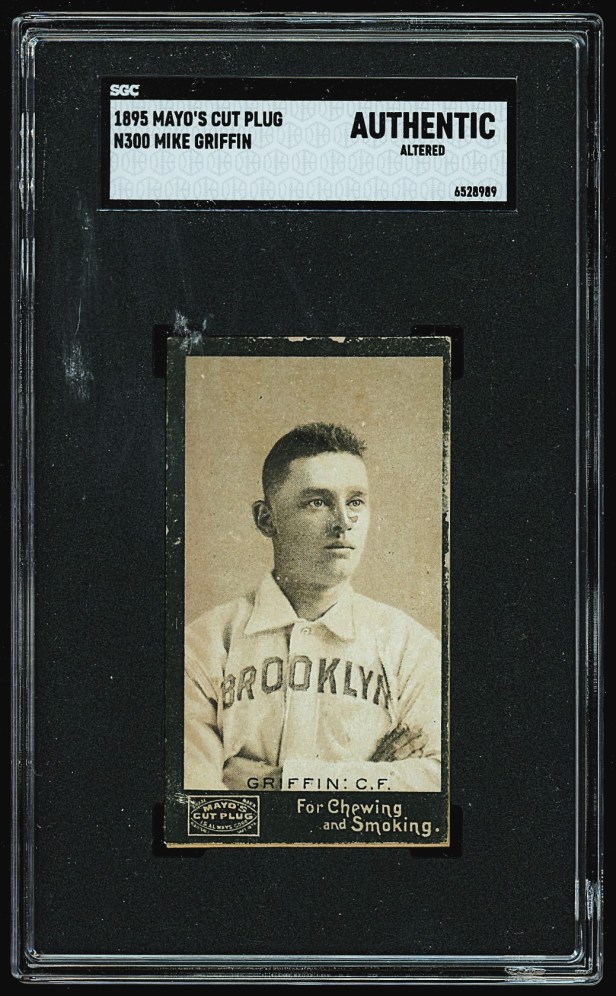
Griffin played in a total of 12 seasons, splitting time with the Baltimore Orioles in the American Association, the Philadelphia Athletics in the Players League, and the Brooklyn Grooms in the National League.
Like Long, Griffin was also an underrated hitter. Part of the reason I was drawn to this set is because it featured a whole slew of guys that most collectors have never heard of but had very good careers. Griffin was a .300 hitter six times and also led the majors in home runs in 1889.
While both cards are regarded as commons, it’s easy to see that these guys were somewhat star players.
These pickups were right in my wheelhouse, so to speak. As authentic graded cards, they are technically lower-grade. Griffin has a small area of paper loss on the back and Long has some residue on the back. The fronts of both, however, are extraordinarily clean the cards are free of paper loss issues on the front and heavy creasing.
These two finds give me a total of four cards in the 48-card set. Baby steps.
 A prime focus of mine has been working on the Allen & Ginter Champions sets. But I’m also working on the other two Champions sets that were issued by Goodwin (N162) and Kimball (N184). These are rarer than the Allen & Ginter cards and have been a much slower build for me than the Allen & Ginters.
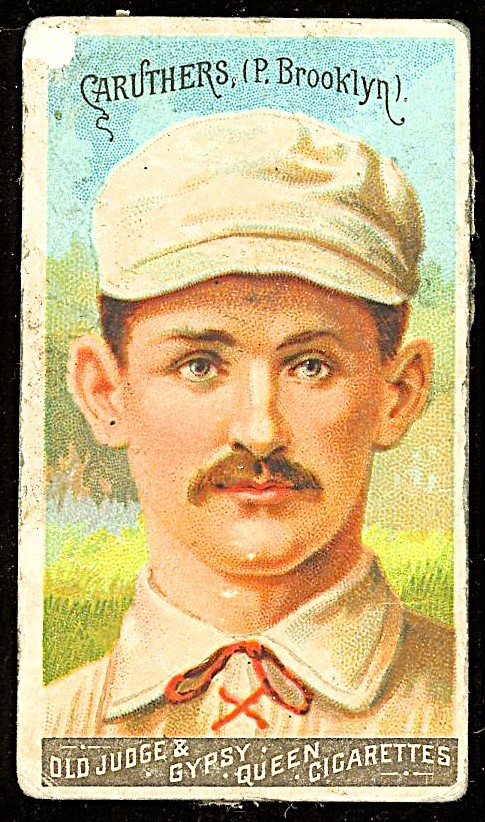
I did manage to pick up my first of the baseball cards in N162, however, in this card of pitcher Bob Caruthers.
Caruthers, who was also one of the baseball players featured in the N28 Allen & Ginter set, twice led the league in wins with 40 each in 1885 and 1889. His respective records of 40-13 and 40-11 also both led the league, as did his .763 win percentage in 1887 when he recorded a 29-9 record. Additionally, Caruthers led the league in ERA (2.07) in 1885.
In a five-year period from 1885-1889, Caruthers averaged more than 33 wins per year, making him one of the top pitchers in baseball.
The N162 Goodwin baseball cards are generally recognized as the most valuable ones of the four ‘Champions’ sets. The four baseball cards in the N184 Kimball set are the rarest but is lacking the big names found in N162.
 Ever since I’ve gotten into collecting cards of Amelia Earhart, I’ve gotten a pretty good idea of the cards issued while she was still alive. But this month, I learned about some new cards that were produced sometime in the 1930s.
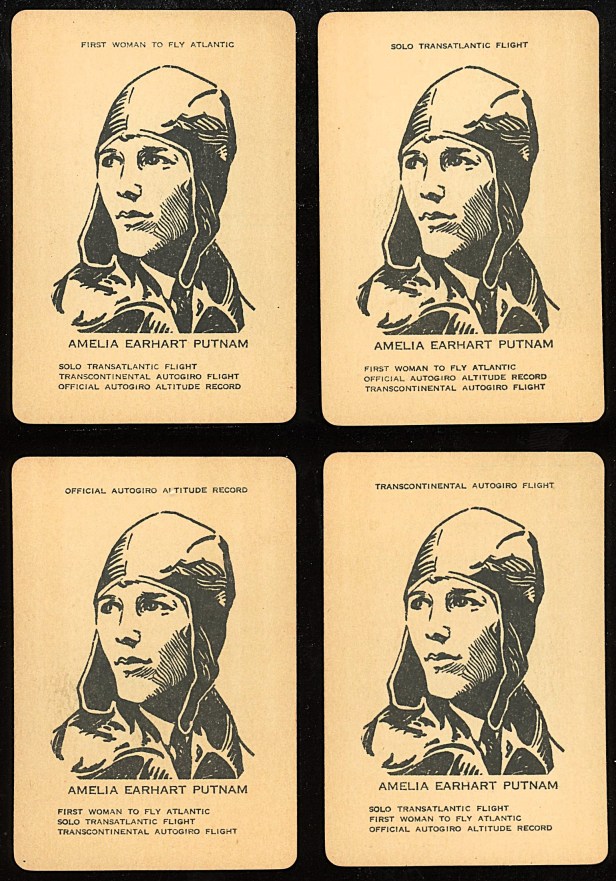
The cards are somewhat tied to the earlier Earhart cards found in the 1930 Milton Bradley Aviation set. These, however, were almost certainly issued a few years later. Also issued by Milton Bradley, these cards are found in a game called ‘Famous Fliers and Their Flights.’ The cards feature a series of aviators and use most of the same ones found in the earlier 1930 Aviation set.
Like those Aviation cards, these cards were part of a sort of match game, identifying different feats performed by aviators. Each aviator in the set, including Earhart, has four cards.
Earhart’s four feats include mentions of her solo transatlantic flight, transcontinental autogiro flight, altitude record, and being the first woman to fly across the Atlantic Ocean.
Here’s more on this set that I only recently learned about.
Another subject I’m always on the lookout for is cycling champion Major Taylor.
This U.S. sprinter was a world champion in his day and he is found on surprisingly few cards, given how popular the sport of cycling was during his active racing days in the 1890s and the early 1900s.
I wrote about Taylor’s most popular cards a couple of months ago here. But while those are the four most common cards of Taylor you’re likely to stumble upon, he is found on some others, too.
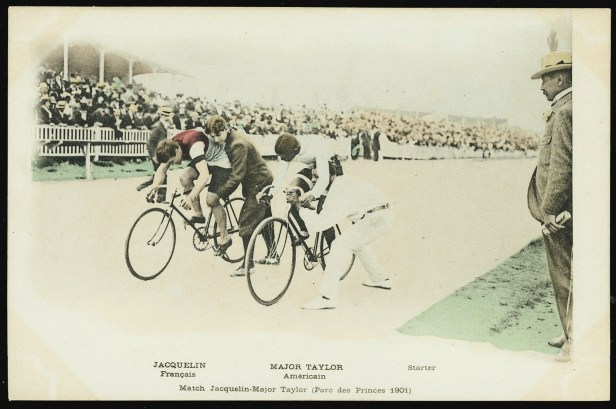
Aside from those cards, the most popular cards of Taylor are generally the postcards where he is pictured. The Les Sports postcard is probably the most common of those. But in October, I grabbed this one of him and Edmond Jacquelin, another world champion.
Taylor was the 1899 world champion while Jacqelin was the champion in 1900. The pair had an epic showdown in France in 1901, squaring off against each other in two races that they ended up splitting.
Want more talk about pre-war cards? Follow me on Twitter / X here.

