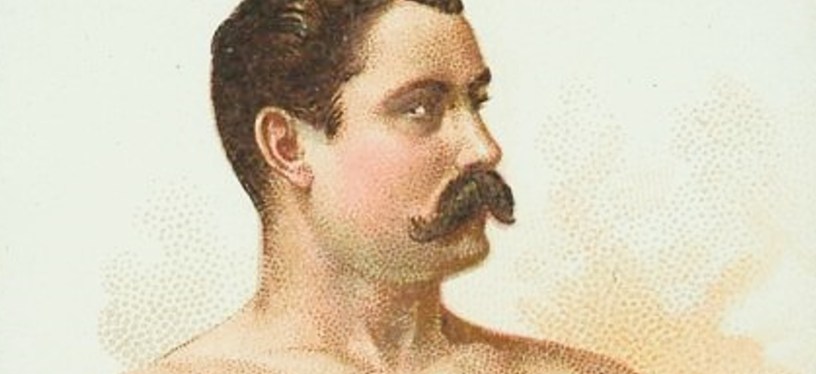
The Allen & Ginter Champions sets are among the most popular cards of the 19th century. Allen & Ginter included cards of sports ‘champions’ in their cigarette packages and the cards remain popular today.
An initial set (cataloged as N28) was printed in 1888 with a second follow-up series (N29) believed to have been issued in 1889. Those two series’ are held in such high regard that, today, Topps continues to issue an Allen & Ginter product even with the cigarettes associated with them long gone.
There are a lot of fantastic characteristics about the Allen & Ginter cards. The artwork is one of their most famous attributes with high-quality lithographs of athletes against simple, plain white backgrounds. However, the thing that the sets are really known for is the variety of sports featured.
The Subjects
Sure, the baseball cards are the most popular. But these multi-sport sets also included boxing, wrestling, tennis, billiards, rowing, cycling, track and field, and even more obscure things like rifle shooting, club swinging, and pedestrianism — literally walking as a sport.
But there’s one thing about the set that I’ve never heard discussed — and it’s the fact that the only subject that is found in both sets is one that is barely known.
There are many famous subjects found in Allen & Ginter’s first series. Among the baseball players, Cap Anson and King Kelly were two of the biggest stars of the sport in the 19th century. The baseball set also included highly-publicized owner Charles Comiskey (then as a player) and Hall of Famers such as Tim Keefe, John Clarkson, and John Ward.
Baseball wasn’t the only sport to feature big names. Hall of Fame boxer John Sullivan is present, as are ‘rifle shooters’ Buffalo Bill and Annie Oakley, perhaps most popular from their appearances at Wild West shows. While the encore N29 Allen & Ginter set released the following year did have some popular subjects in it, it paled in comparison to the first set. And that is because Allen & Ginter used all new athletes for its second set.
Well, almost.
Theo Bauer’s Repeat Performance
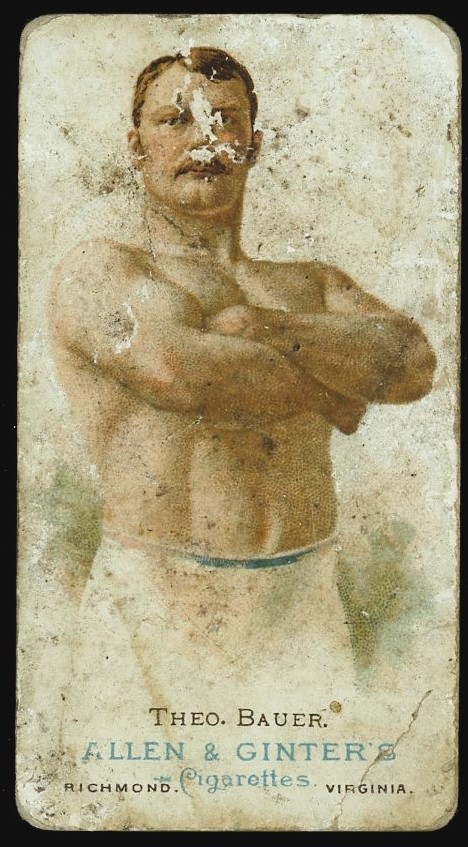 The lone subject that is found in both sets is a wrestler known as Thiebaud Bauer.
Bauer was originally from France and came to America already with wrestling experience. He was actually known for being one of the first wrestlers to wear a mask.
Bauer led a colorful life — one that unfortunately spiraled out of control after his time in the sport was practically over. At the time of these cards’ production, Bauer was a two-time or three-time Greco-Roman Wrestling champion. However, the credibility of that has been called into question as some believe that the matches in wrestling as early back as Bauer’s time may as well have been predetermined as is the case with modern wrestling. Nevertheless, Bauer was regarded as one of the top wrestlers of his era. He is regarded as the only three-time winner of the World/American Greco-Roman Heavyweight Championship.
Seven of the 50 cards in Allen & Ginter’s first series featured wrestlers and Bauer would have been an obvious choice for inclusion. However, what was odd was that, while Allen & Ginter featured only fresh faces in its second set, Bauer returned in that series as well.
The mystery, of course, was why was Bauer the only subject that returned?
The question of being the only one to reappear is one that is impossible to determine. The great majority of the subjects from N28 were likely still active athletes a year later. If Allen & Ginter wanted to recycle some athletes, they easily could have.
But it is clear from the checklists in both sets that that isn’t the approach the company wanted to take. While we can’t say why Bauer was the only repeat subject, his return does make a little sense if you take a close look at the checklists in each year.
Checklisting, Checklisting
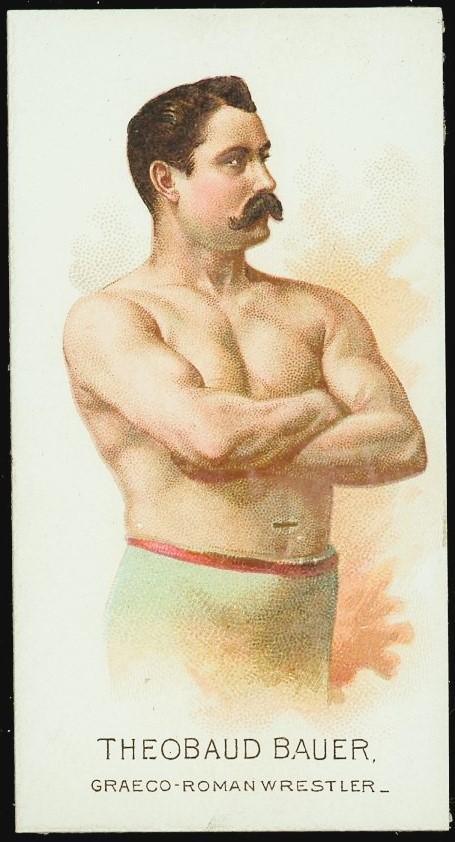 As I mentioned, wrestling was a substantial part of Allen & Ginter’s N28 checklist. With seven of the 50 cards focused on that sport, nearly 15% of the set was dedicated to it.
The N29 set, though, showed a change in direction.
In that second series, Allen & Ginter’s clear focus was to include a variety of different sports. While the company included seven different sports subsets in N28, that number more than doubled in N29 with the addition of several different types of athletes.
Now, that number is slightly misleading. A few categories could be more logically lumped together (for example, there are three different types of pedestrians classified). Even with that distinction, though, there are many more sports featured than there were in the previous year. And that obviously meant sports that were featured before would have their representation slashed.
Baseball players were cut from ten to six. And even the most popular sport, boxing, saw its subset decreased from ten to eight. Some, like billiards and rifle shooting, were scrapped entirely.
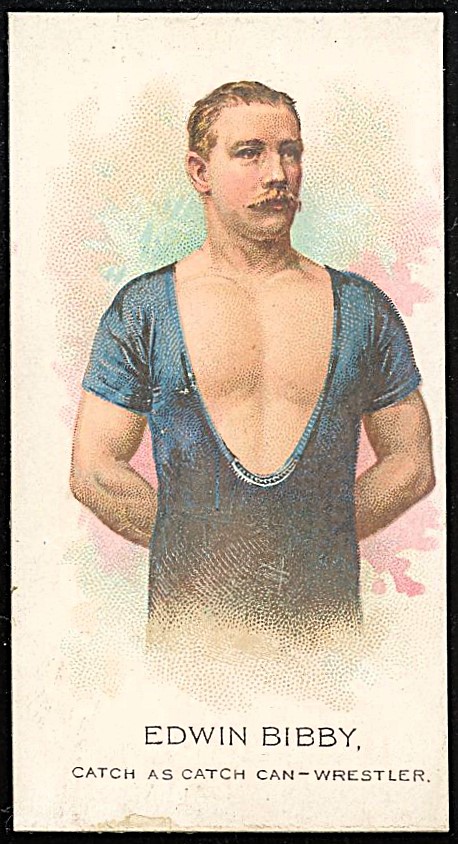
Wrestling didn’t escape the ax, either. While there were seven wrestlers in the N28 set, only two were present in N29 — Bauer and another grappler named Edwin Bibby.
Retired Wrestlers?
When I think about Bauer’s inclusion in N29, I keep coming back to that ‘Champions’ moniker from Allen & Ginter. It is notable that the two wrestlers featured, too, were different types, as classified on their cards. Bauer was a Greco-Roman Wrestler while Bibby was a Catch as Catch Can Wrestler. It is clear that Allen & Ginter wanted to include one of each.
I was not able to find anything immediately on Bibby. But, notably, his career appears to have ended late 1887. And, try as I could, I could not find anything definitive as to when Bauer’s career ended. Several sources indicate that he lost the belt for the final time to William Muldoon, who then held onto it until 1891 — after the release of this set, when he retired. But there is little to suggest he wrestled much longer, if at all.
Is it possible that Bauer, too, was retired at the time of these sets? It’s not only possible, it’s likely. This article indicates he was nearing the end of his career in 1883, and there are no strong references to his competing after that year.
The play could have been about using retired wrestlers. Muldoon was the Greco-Roman champion when these sets were released and, to me, would have been a more logical choice given the theme of the set if only one Greco-Roman wrestler was to be included. But he, too, was in N28 and perhaps Allen & Ginter wanted to feature former champions that were already retired.
Sadly, that isn’t much to go on and is little more than a theory. Consider also that there were plenty of other worthy retired wrestlers that could have been featured instead. One, for example, was William Miller, a rival of Bauer and two-time champion. Miller was not featured in N28 and could have been a nice addition in N29.
Simpler reasons could have been at play here, too. Getting Bauer’s approval to be featured in the set, for example, may have been the easiest to secure. The reality is we are not likely to ever know the reason he gained entry into both sets.
Want more talk about pre-war cards? Follow me on Twitter / X here.
 Pre-War Collector