
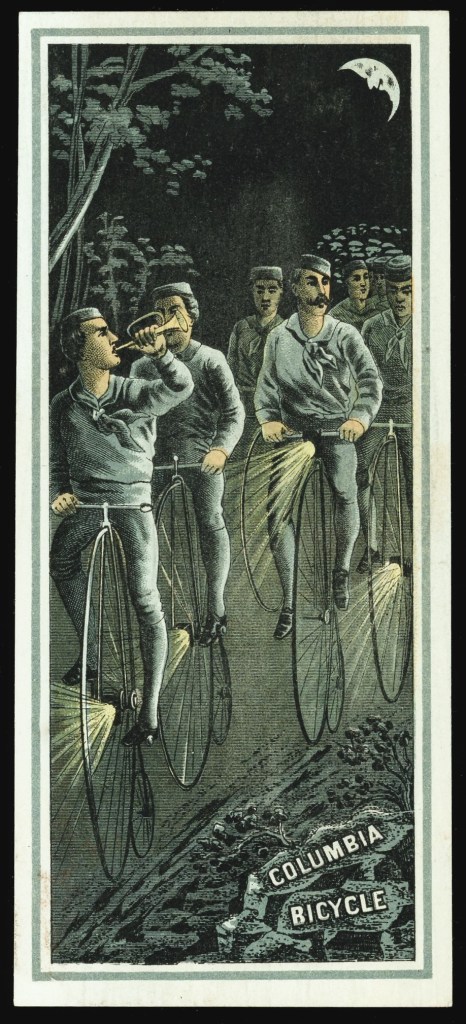
 Trade cards can be referred to as a few different names. Some collectors call them trade cards. Others may use the term Victorian-era cards. Different collectors may call them advertising cards. And others still combine the names (i.e. Victorian era trade cards). Essentially, when you hear any of these terms, the items generally being discussed are cards from the late 19th century or early 20th century that were mostly used to advertise businesses or events.
Here are ten things to know about collecting them.
An Assortment of Sizes – Trade cards range in sizes. Some, may be quite small, equivalent to the size of a business card. Others can be the size of a photograph that is 8 X 10″ or more. The majority, however, are somewhere in between. A great many are about the size of a postcard, give or take.
Most Were Not Specific to Any One Business – While some trade cards were created purely for the advertising of only one specific business, most were not. For example, it is not uncommon to find a card with a specific picture advertising a clothing store and then finding a different card with the same picture advertising a restaurant. These were often sold by a printing company where the purchaser could have their business advertisement added to the back or somewhere in a blank area on the front. Sometimes that addition was printed and other times it was merely stamped.
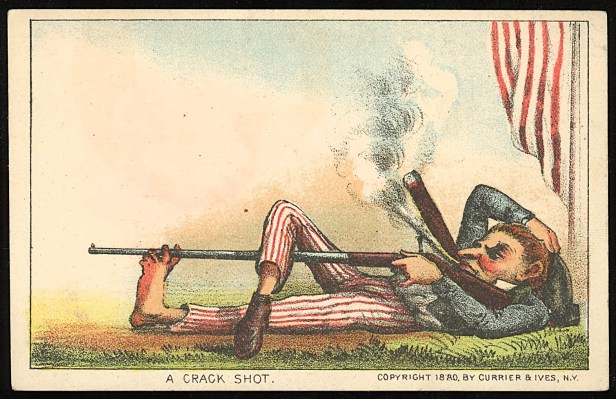
Dates Often Unknown – Trade cards are often dated as 1880s cards or c1880s but the exact year of production often is not known. Some cards provide information, such as a copyright date that is printed on them. Others may have advertiser information that promotes a specific event with a date. But the majority of these cards are difficult to nail down to a specific year or even years. Further, some of the cards were printed in more than one year.
The broad 1880s date is used frequently because that is the general period that many trade cards were issued. However, that is mostly an estimated timeframe. The earliest trade cards are believed to have been printed in the 1850s or 1860s and some extended into the 20th century.
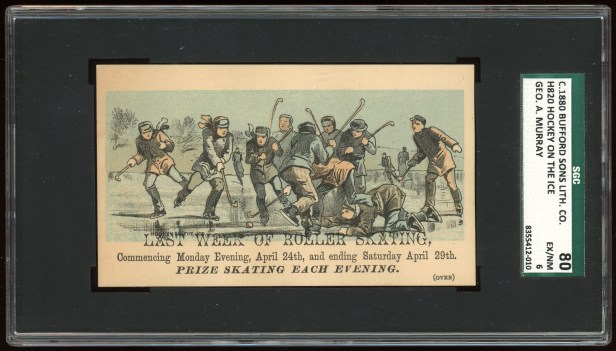
Value Hinges Mostly on Two Things – For the cards that are more valuable, aside from condition, the price is influenced by one of two things. The more valuable cards either have a notable image or advertise a notable product, company, or event. Premiums are given for cards that promote sports (baseball is a popular subject) or famous people, events, or structures. Statue of Liberty cards, for example, are selling quite well as of late. While most trade cards are inexpensive, some can be worth hundreds or even thousands of dollars.
That should not scare anyone off that has an interest in buying them, however. While the values for trade cards vary widely, the great majority of them feature generic, non-sports images and advertise basic products. Most of those are inexpensive and worth only a few dollars.
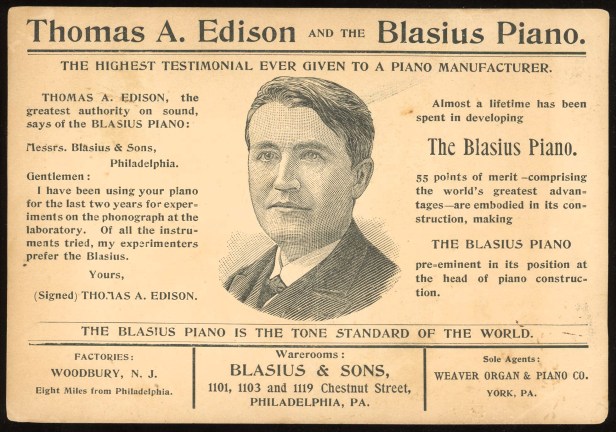
Not All Include Advertisements – While the intent of most trade cards was to advertise a business, many do not do that. It is quite common to find trade cards without any advertising at all. Some of those are referred to as ‘stock’ cards — cards that were intended to have advertising on them but were never distributed to a business that used them.
Mass Produced – The reason many are so invaluable is because they were printed in very large quantities. Many have since been destroyed but these are still readily available. Some, in fact, were produced by the millions. If you search for them on eBay, you can find thousands of listings for them at any given time.
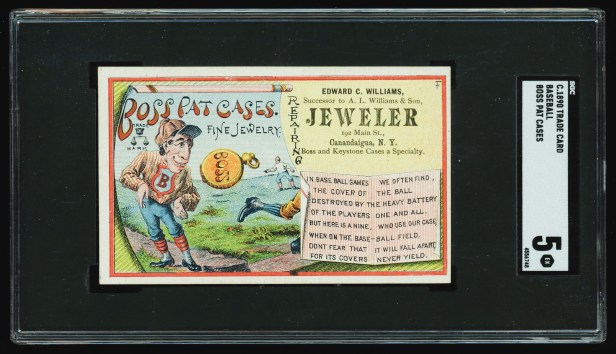
Significance in Sports – Trade cards are influential as they often are the earliest card depictions for sports. The earliest cards for many sports are generally considered to be trade cards or, depending on what you consider to be a true trading card, cabinet cards or CDVs. At the very least, trade cards are among the earliest types of sports cards.
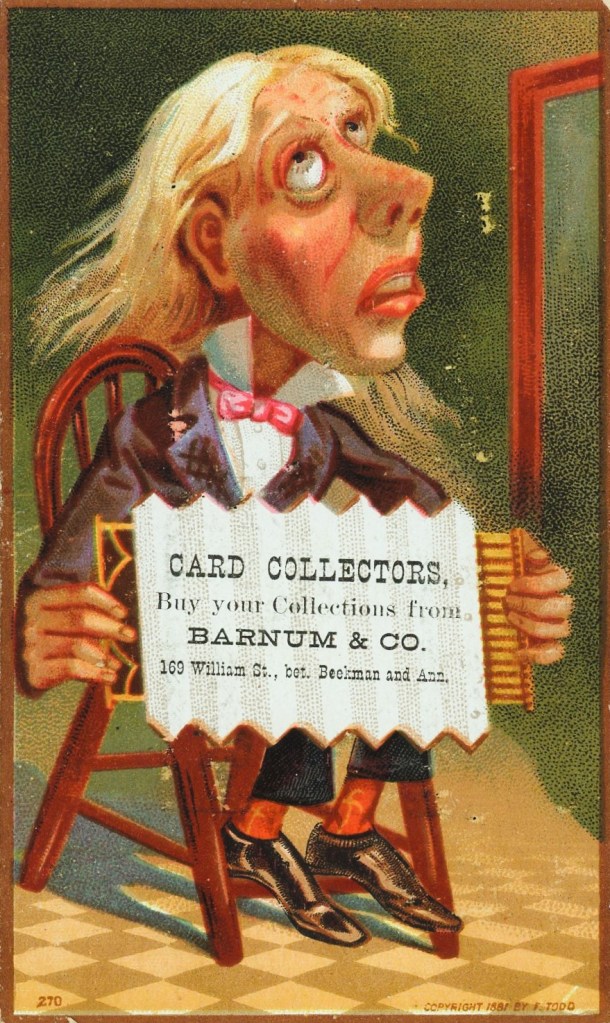 Many Early Collectors – The cards were mostly intended to be used for advertising purposes, however, it is clear that they were highly collectible for the pictures on them. Even today, many collector scrapbooks full of these cards still exist. Some trade cards, like the one shown here, even promoted their sale and indicated where collectors could buy them.
Back Damage is Common – One of the major faults of trade cards found today is back damage. That is because a great many of the aforementioned original collectors glued them into pages in scrapbooks with the cards having subsequently been removed by modern collectors. As is the case with any card, condition is a key. While popular cards with back damage are still desirable, ones without it are worth much more.
Not to be Confused With … – While it might be tempting to call every 19th century ‘card’ with a picture on it a trade card, that isn’t always the case. Some of these are merely pictures that were printed without any intention of ever being used for advertising. Others are called ‘scraps’ — generally, a die-cut picture of some sort of subject. Postcards and Reward of Merit cards (given to students, usually in school, by teachers) are not generally trade cards, either. While they may have value, some of these fall more under the paper ephemera category as opposed to being an actual advertising trade card.
Want more talk about pre-war cards? Follow me on Twitter / X here.
 Pre-War Collector