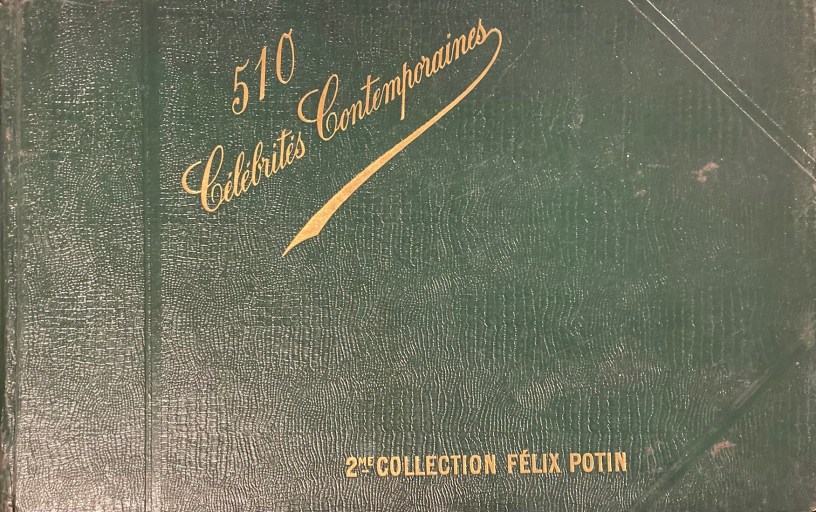
This is the third part of a five-part series on the Felix Potin Contemporary Celebrities set. Here’s Part 1, which focused on a general overview of the cards. Part 2 included a look at the first set.
By some collector estimates, it took Felix Potin about a decade to release the second set of its Contemporary Celebrities series. While some accounts of the exact date of production vary, it is believed to have been issued in and/or around 1908.
The set was another massive one compared other similar sets being produced around the same time. The T206 baseball card set, by comparison, was released from 1909-11 and is dubbed ‘The Monster’ for its many cards — 524 to be exact. Felix Potin issued a 510-card set in Series 1 and this one again included 510 cards.
Why Felix Potin settled on exactly the same amount isn’t clear. But what we do know is that, early versions of the first series started with 500 cards and then extended to 510. Felix Potin chose to make its second series another 510 cards.
The cards maintained the same format as the first series cards. Backs were again blank because, like Series 1, an album was created to house the cards in Series 2 as well. The lone difference, really, is that the tops of the Series 2 cards indicate they are part of the second collection.
Major Taylor
 While Series 1 did not include many cards that are considered all that valuable today, Series 2 is a little better.
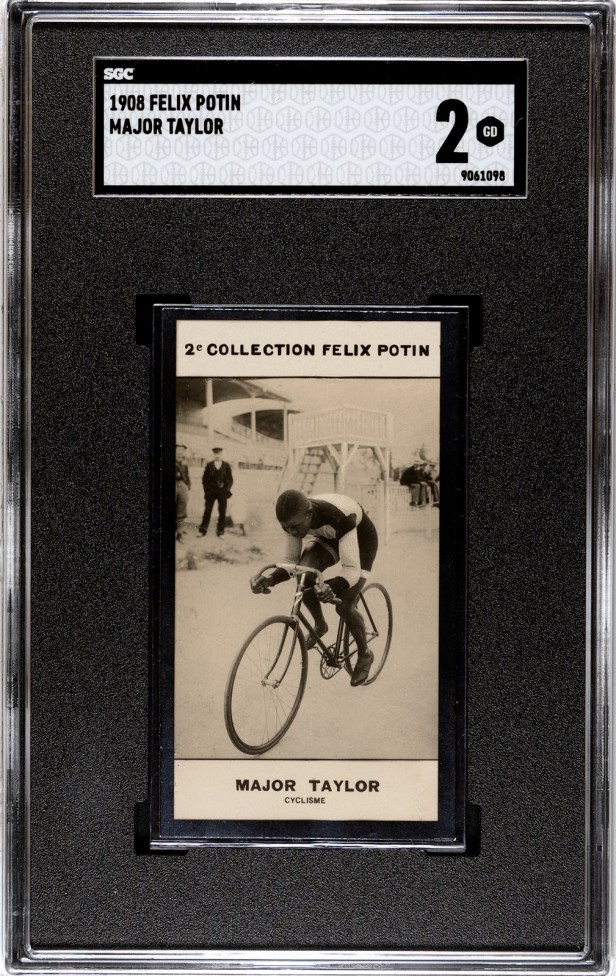
Easily the highlight of this sophomore set are the cards of cycling champion Major Taylor. Taylor, an American, was the world champion in 1899. He has two variations — a more common variant picturing a side view of him and a much-rarer front facing card.
It is unclear when the two variations were printed in relation to each other. What we do know, however, is that only one card is necessary for set completion. That is because the Series 2 albums include only one place for a Taylor card. You either have one or the other.
Were both printed simultaneously? While that is possible it does not seem likely. If they were, you would imagine that Felix Potin would leave space in the album for both cards instead of simply one.
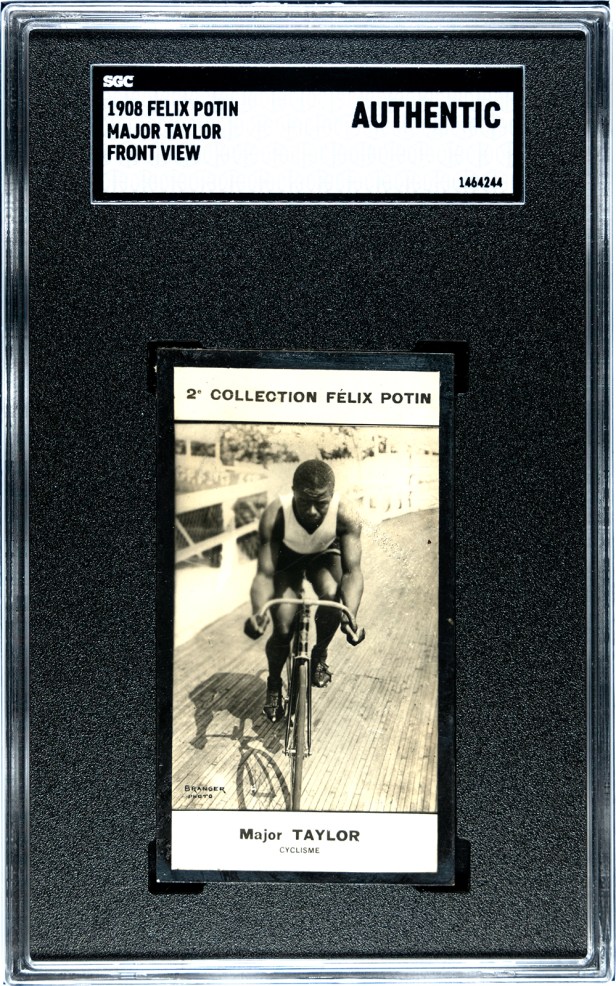 What we can say is that, unequivocally, the front-facing card of Taylor is much harder to find than the side view card. While you will usually see a few of the side view cards for sale on eBay at any given time, it is not uncommon at all for no front-facing cards to be available. I have also personally owned several of the side view Taylors and have had only one of the front-facing cards. In my own collection, I have seen the latter much less.
Prices on both cards are not always consistent. With the exception of examples still pasted into albums, lower-grade Taylor side view cards typically start in the $150-$250 range. Front-facing cards are seen much less but, in general, start around $250-$350.
All of that said, it should be noted that the values of Taylor’s cards fluctuate somewhat wildly. They can sell, at times, for more than the values listed here. While it could be said of almost anything selling on eBay, particularly with Taylor cards, it seems that the prices largely depend on who is paying attention and bidding.
A New President
 At the onset of Series 1, William McKinley was President of the United States. McKinley was assassinated in 1901 and the card that indicated he was President was seemingly replaced with one that only bore his name sans title.
But while Teddy Roosevelt replaced McKinley after his death, even though Series 1 cards are believed to have been issued for several more years, Roosevelt did not get a card in that set. Felix Potin only continued to offer the McKinley card.
That changed in Series 2 when Roosevelt finally did replace McKinley. And Roosevelt is not only in the set, but, like Taylor, has two different variations. One, shown here, is a more ‘complete’ portrait of the President. The other is a less attractive card with a more distant shot of Roosevelt with the bottom of the image not extending fully to the bottom border bearing his name.
Both, however, are attractive to collectors. Lower-grade cards typically start in the $25-$50 range and are significantly more sought after than the more-heavily produced cards of his predecessor McKinley.
(Not) Buffalo Bill
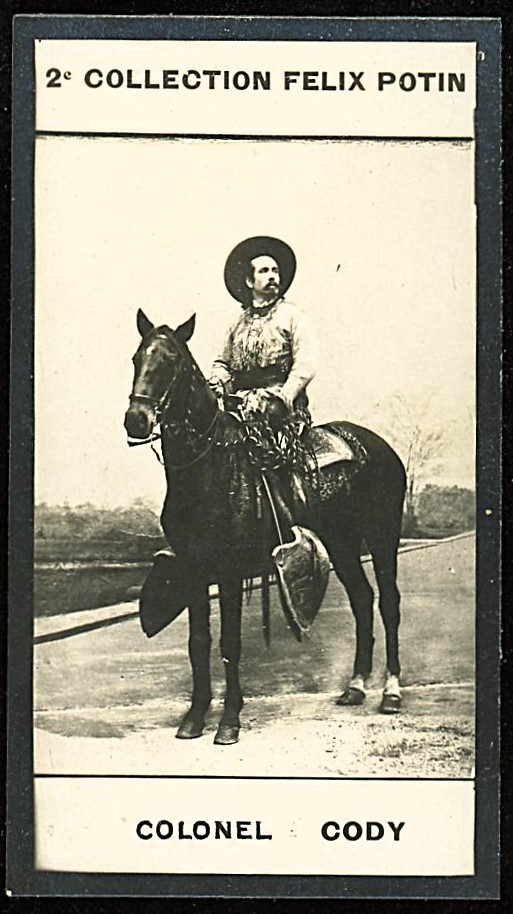 One card that has intrigued collectors for a long time is the card of a ‘Colonel Cody’ in the set. The card is almost always credited as one picturing Wild West hero Buffalo Bill Cody. However, Buffalo Bill is not the subject featured, as I learned about a year ago.
It is easy enough consider Buffalo Bill as the person depicted. And that, I suppose, is why it is so easily misidentified. Buffalo Bill, too, was a Colonel. And the subject looks close enough like him to make the connection.
However, the man featured is not William Frederick Cody (Buffalo Bill). Instead, it is Samuel Franklin Cody. Samuel was often mistaken for Buffalo Bill. He was not only another Wild West showman, but he took the last name ‘Cody,’ likely to further his career. The two were unrelated and Samuel’s actual last name was Cowdery.
While some Americans are certainly in the Felix Potin set, the reason Cody (an American) likely managed to get into it is because he moved to Europe prior to the set’s release, and claimed to be the son of Buffalo Bill. Cody toured Europe with an act similar to Buffalo Bill’s and gained some measure of fame there.
The card is almost always sold as a Buffalo Bill card today.
 Others in the Set
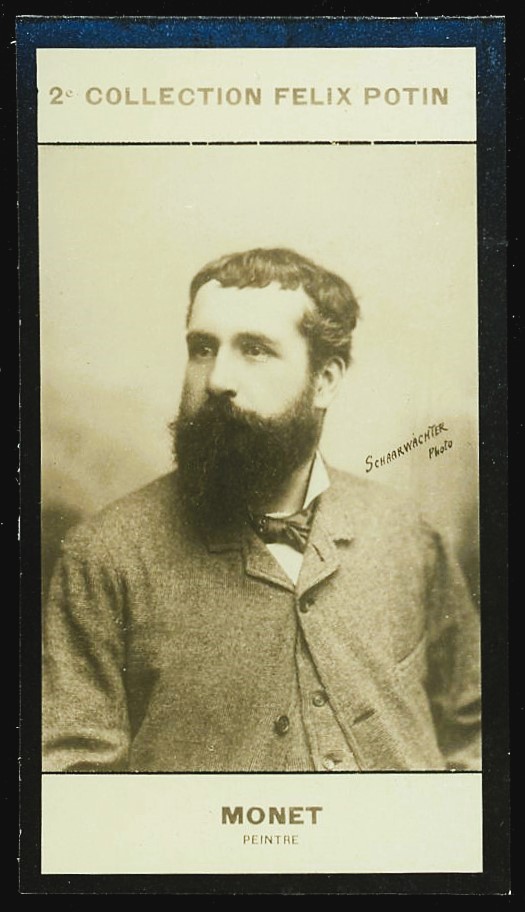
The set includes plenty of other notable names. One of the more sought is the card of famous painter Claude Monet. But the set contains other key subjects here, too.
Some of those include Madam Curie, King George (England), Admiral Dewey of the United States, famous author Rudyard Kipling, composers Bizet and Puccini, and actress Anna Held.
Prices for these cards vary but Monet is typically the most valuable, selling for around $25-$50. Other famous subjects are usually in the $5-$10 range, sometimes a bit more.
Similar to the first series, there are many important figures in the set. Frankly, almost everyone with a card was an important subject. However, the majority of the cards are considered commons and largely sell individually for $1-$2.
Athletes
If you’re into these sets for the sports cards, fortunately there’s much more here than is found in Series 1.
Series 1 included only 14 cards designated for athletes. Series 2? 66.
Even better, there’s a lot more variety in the type of athletes in Series 2. While Series 1 included only cyclists and fencers, Series 2 included cards of auto racing, jockeys, wrestlers, cyclists, swimmers, track and field stars, rugby players, and even billiards players.
 While the cards of Taylor the cyclist are the most valuable, the auto racing cards, in particular, are getting more attention these days. Two interesting cards are for Madame du Gast and Bob Walter, early female racing stars.
Also in the set is wrestler Paul Pons. While Pons’ name is not as well-known as the likes of Frank Gotch or George Hackenschmidt, he is recognized as the first Greco-Roman wrestling champion. And as I mentioned in the overview (Part 1) of this series, Pons has two variations.
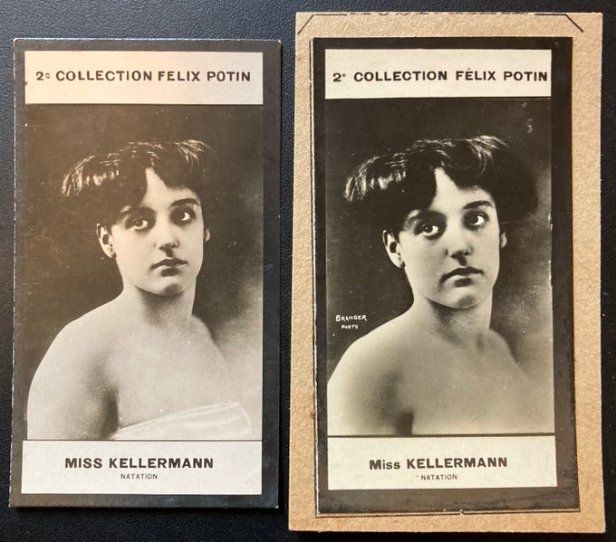
Another popular card is that of famous swimmer and actress, Annette Kellerman. Kellerman was not only a world-class swimmer, but made history as the first major actress to appear nude in a movie and also one of the first to wear a one-piece swimsuit. Kellerman has at least two variations (cropped slightly differently and with a photography credit on one) as shown here.
Cards of the athletes vary heavily in price. Some can be purchased for as little as $5-$10 while others can sell for $25 or more.
Price and Rarity
While a rarer and more valuable set than Series 1, bargains on this issue can sometimes be found on complete sets bound in albums. While generally in the $250-$350 range, they can occasionally sell for a bit less.
Gallery
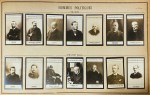
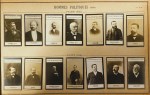
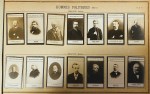
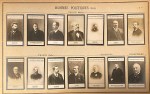
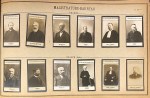
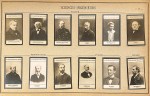
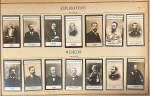
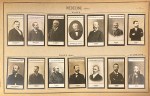
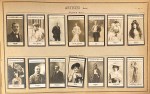
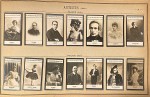
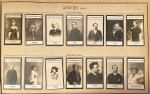
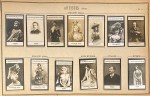
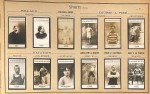
Below are images of the entire set as they appear in the album.
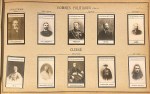
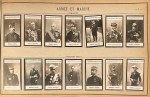
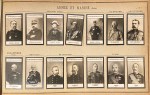
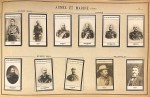
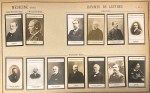
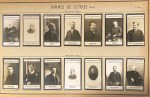
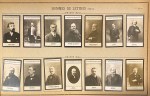
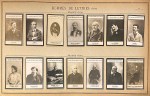
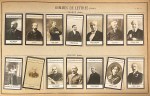

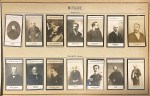

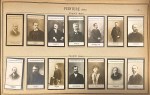
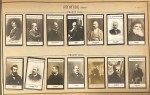
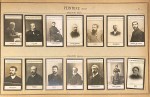
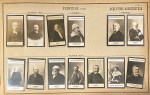
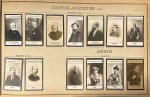

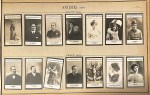
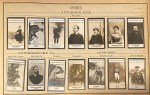
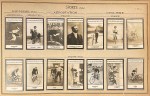
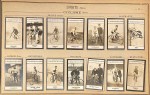
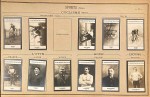
Want more talk about pre-war cards? Follow me on Twitter / X here.
 Pre-War Collector
Comments are closed.