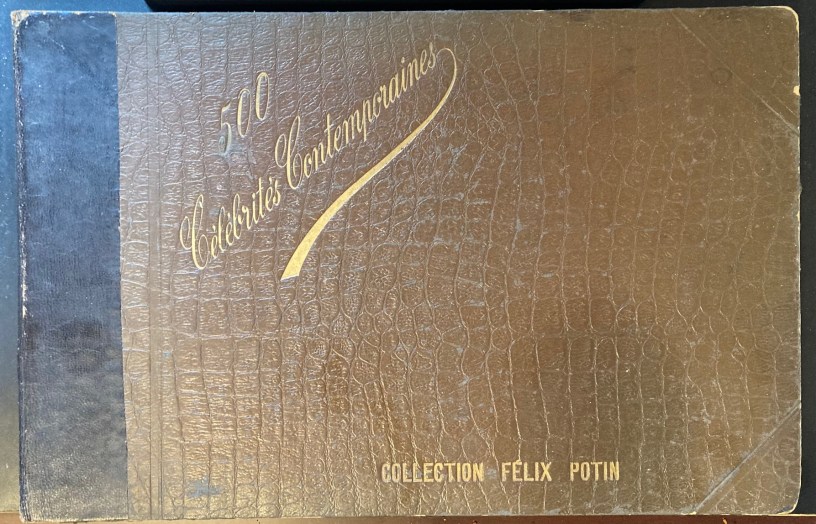
This is the second part of a five-part series on the Felix Potin Contemporary Celebrities set. Here’s Part 1, which focused on a general overview of the cards.
Felix Potin’s first series of cards seems to be the one where the date of release varies the most. I have seen this described as a set that was first issued as early as 1898 and as late as 1908 when the second series is believed to have been released. However, while the cards may have been continually printed during that range, we know that the first cards were issued no later than 1901.
The cards have a semi-gloss and measure about 1 5/8″ wide by 3″ tall. The images are mostly black and white, though some printing makes them a bit more of a sepia tone. It’s also notable that there are many variations. A few are very different pose variations but most are simple cropping variations with images appearing slightly smaller or larger. Some variations are in the name/title of subjects. Others, still, are with photo credits, which are sometimes displayed in small font in the background and other times, not mentioned at all.
This first set is generally the least desirable one. Don’t get me wrong — it is a massive set that includes a lot of notable subjects. However, the great majority of these figures are not highly-collectible and their cards are not too valuable. Nearly 40% of the subjects are world leaders, military men, or politicians. And, important as they may have been, most of their cards are regarded as commons to collectors.
The rest of the set is a little more intriguing. Other subjects include those in arts, theater, music, and science.
Note that, while the initial set included 500 cards, a handful of others, including some variations, were printed later. There are both albums offering 500 cards and also 510 cards. The 510-card albums should not be confused with the second or third series’ albums, which also included 510 cards.
One and Done?
While Felix Potin printed many of these cards, seemingly indicating that they were quite popular, it isn’t clear if they planned to issue more than one set.
Two things point to the idea that the company may have only planned for this to be a one-time thing.
For one thing, the cards do not indicate they are part of a first series. Instead, they were only called “Collection Felix Potin.” The second and third series’ do include a ‘2nd’ and ‘3rd’ designation. But if Felix Potin had definitely planned to issue more cards, it is likely they would have indicated these were the first series cards.
Second, some believe the cards were printed for a decade or even longer. If a second series had always been planned, it seems odd that the company would have waited so long while continually reprinting these cards.
Keys to the Set
 This set has the least amount of ‘star power’ of the Felix Potin sets — at least in terms of value.
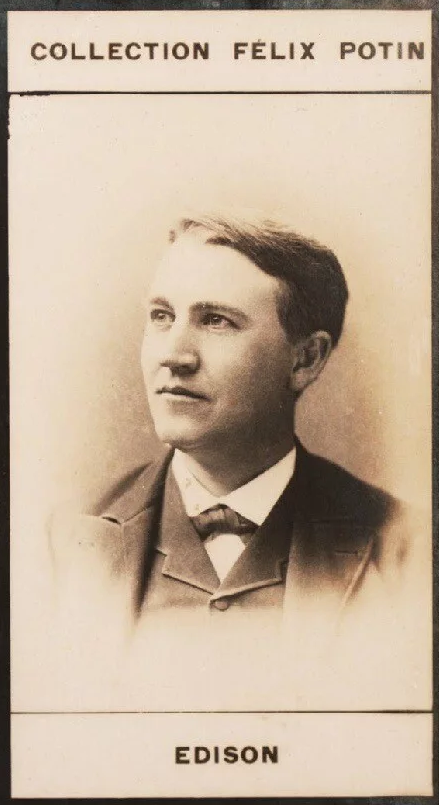
The most valuable card is typically the one featuring famous inventor Thomas Edison. Edison is one that was caught in the variation mess. In all, he has at least three known cards. In one, he is facing towards the camera and the other two, his face is looking off more to the side.
I haven’t really been able to find any conclusive information to rarity. Few of the cards have been graded with the majority likely buried inside of albums. However, the ‘in-between’ version of his card with his head positioned somewhere in between this more front-facing card and a second showing his head more to the side, seems to be the hardest one to find.
Edison’s cards vary in price but generally start in the $25-$50 range.
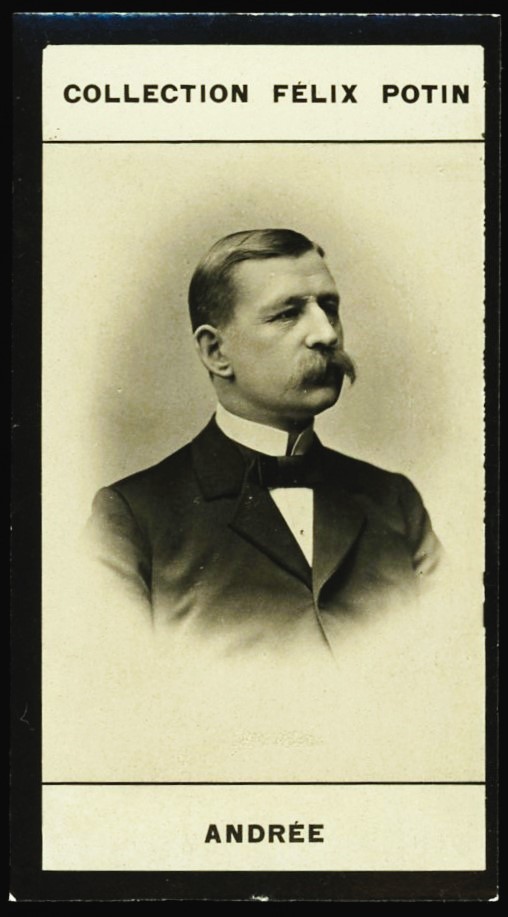
A few other notable subjects are also found. The cards of U.S. President William McKinley. Plenty of others, too, are sought after, including the likes of Jules Verne, Queen Victoria, explorers Fridtjof Nansen and Salomon August Andree, actress Sarah Bernhardt, scientist Louis Pasteur, engineer Gustave Eiffel (of Eiffel Tower fame), and authors Tennyson and Tolstoi, among others.
William McKinley Cards
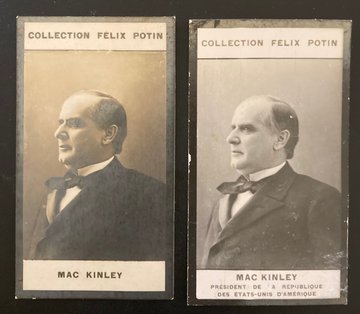 U.S. President William McKinley has two primary variations in the set (it is possible that other minor variants exists). His cards not only prove that Felix Potin made some updates to the set, but also help to prove that the first cards were printed no later than 1901.
That is because, on one of his cards, McKinley was noted as the U.S. President and 1901 was his final year in office as he was assassinated that year. A second card of McKinley was issued, seemingly post-assassination, since he is simply known by his name on that card.
McKinley’s cards include an uncorrected error. His last name is misspelled as ‘Mac Kinley’ on both types.
Neither is what could be considered a scarce card. However, the card indicating he was the U.S. President appears to be harder to find than the ‘Mac Kinley’ variation.
 Where’s the Sports?
There’s some sports, too, but if that’s what you’re after, you’re better off holding out for the later Felix Potin sets.
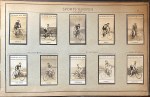
This is the lightest of the four sets in terms of sports. In all, there are only 16 cards of subjects clearly depicted as athletes.
Included in this series are only ten cyclists and six fencers. Notable cycling champion Arthur Augustus Zimmerman is here. Zimmerman was the first cycling world champion. But there are few other highlights here. As was the case with the world leaders / politicians / military men, while there are some notable athletes here worth learning about, in terms of value, it’s quite small.
Zimmerman’s card is a relative bargain at around $10.
Somewhat of a sports card, too, is found in Lord Balfour. A politician and Prime Minster of England, Balfour was a serious golfer and tennis player. He served as the captain of the Royal and Ancient Golf Club of St. Andrews and is featured in some golf sets.
Price and Rarity
Of the four Felix Potin albums of celebrities, the first series sets are the most plentiful. It is not uncommon to see these available for sale on eBay. Complete sets are often sold in the $150-$300 range.
Gallery
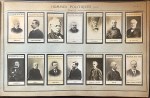
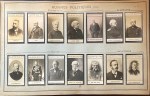
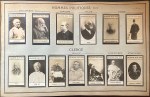
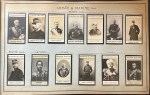
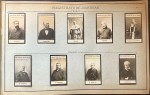
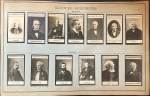
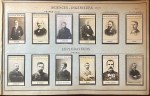
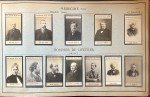
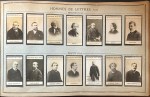
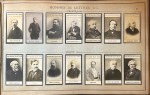
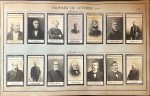
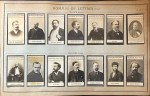
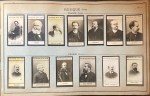
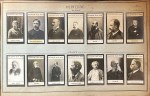
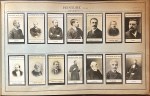
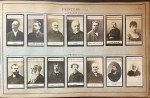
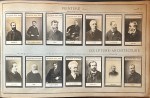
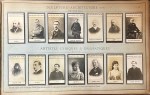
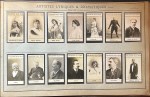
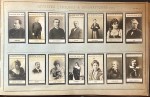
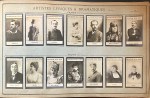
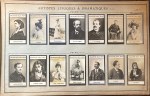
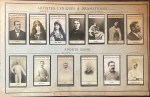
Below are images of all of the cards in the set as presented in the album.
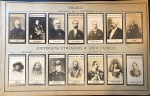
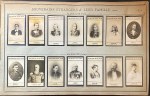
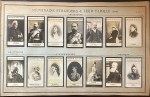
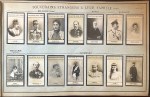
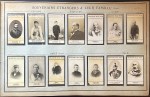
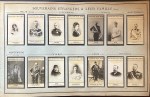
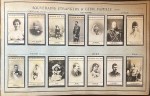
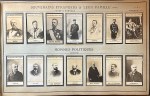






Want more talk about pre-war cards? Follow me on Twitter / X here.
 Pre-War Collector
Comments are closed.