Back in February, I’d planned to take a couple of weeks off from writing on the site just to catch up on some other happenings. Well, a few weeks turned into about a five-month hiatus before I knew it.
Rest assured, I’ve been keeping tabs on all of the things I need to write about and will get to those in, hopefully short order, in the coming days.
Of course I’m still collecting. More than ever, actually. And while I could write about all sorts of oddball cards that I’m anxious to, I wanted to use this first article back to focus on a recent award I was honored enough to win.
A big thanks to the fine folks at SABR (Society for American Baseball Research) — specifically to the organization’s Baseball Cards Research Committee. The committee selected me as the 2025 Jefferson Burdick Award winner. And here’s a second mention of the award on SABR’s overall site.
The committee, if you’re unfamiliar with it, writes some fantastic articles on their blog and, since 2020, has presented the Jefferson Burdick Award to ‘individuals who have made significant contributions to the baseball card hobby.‘ Some folks that have previously won the award are none other than TCMA co-founder Mike Aronstein, Dr. Jim Beckett of Beckett Media, and renowned Donruss Diamond Kings artist, Dick Perez.
Needless to say, I am not nearly as well known as any of those folks.
 I’ve said this to several others but it bears repeating here. I’m a bit embarrassed to have even been nominated for the award, let alone ultimately selected. While I’m very proud of the work I’ve done in writing about cards, researching, and even making new discoveries, the sort of work I’ve done to help checklist sets and write about cards ultimately doesn’t feel all that important in the grand scheme of things. Partially, because we’re drowned in media. And partially, because these early cards pre-dating World War II are such a small (albeit, important) niche of the baseball card hobby.
When I grew up collecting cards, like every other snot-nosed kid in the junk wax era, I always had a Beckett price guide within reach. Beckett’s price guides, along with Tuff Stuff’s (and, earlier, CCP), were the most widely read card publications arguably at the height of card collecting when card shops were practically on every street corner and cards were being printed by the literal billions. That’s influence. Not me writing about an obscure variation more than 100 years ago in a set that most people haven’t even heard of.
That’s not to belittle my own work in the slightest. I’m supremely proud of it. I do it, because I feel it’s important. And I feel justified when I get an email from a collector asking about an obscure card or set that I’ve written about. It’s just difficult for me to think of my writing in the same context as Beckett publications (cheap plug, subscribe to Beckett’s Vintage Collector magazines where you can find my articles), which have been so instrumental to the hobby, or Diamond Kings, which anyone in the junk wax era can attest to their importance.
Nevertheless, I am thrilled that collectors have found that work meaningful. And a big reason I’m ecstatic to have won the award is because it’s named after who is easily my biggest ‘idol’ in the hobby.
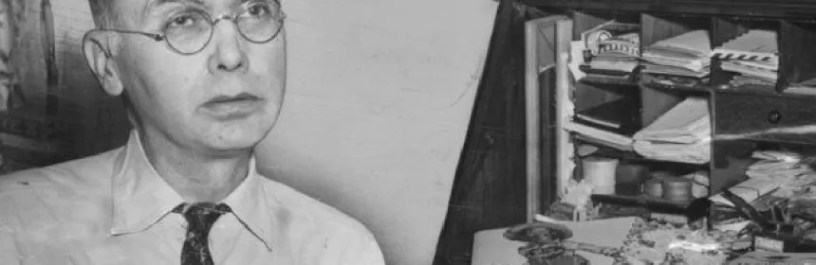
 No, Jefferson Burdick didn’t invent card collecting. The hobby was around a few decades No. before even his 1900 birthday. What Burdick did do was make card collecting much easier by creating what was, to that point, the most useful reference a card collector could have — the American Card Catalog. Many are surprised to find it devoid of checklists when they first come across a copy of the book. The book, instead, mostly provides a record of what exists and even offers rough pricing of cards in a particular set. However, it also offers much more.
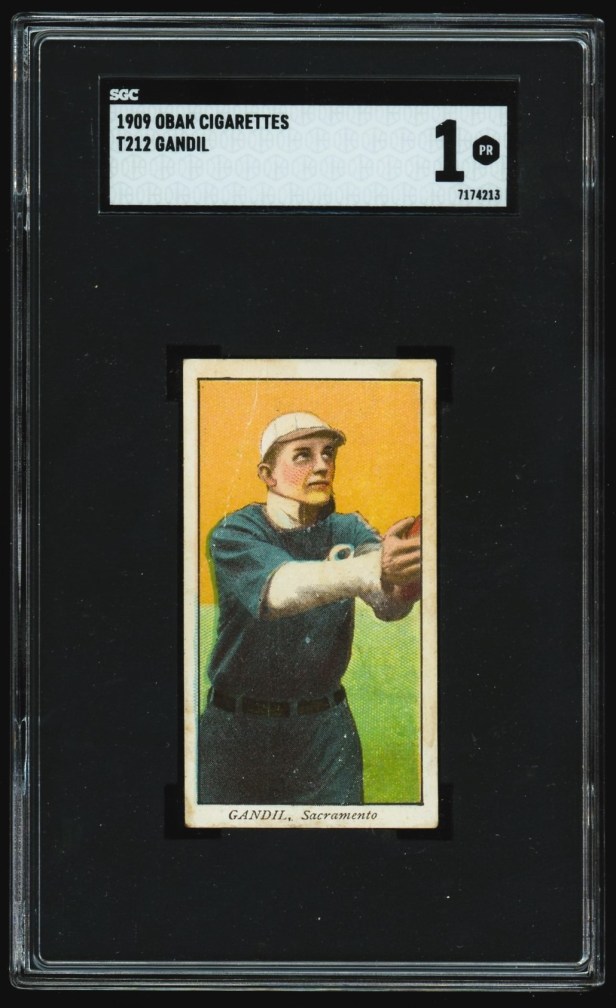
In addition to developing a thorough classification system to sort the various types of cards (Tobacco cards were identified as ‘T’ cards with a number to follow to identify a particular set), he also provided an overview for the various classifications of cards explaining when and how they were offered. Burdick even covered all sorts of relevant topics in a ‘preamble’ to the book’s cataloging, discussing things such as condition, history, and even soaking.
Tackling such a project from scratch would have even been a heavy lift today. But to do it in the late 1930s when the first edition of his catalog was released must have been an enormous task. No internet. No hobby magazines. Not even many dealers that solely specialized in card collecting. Burdick, no doubt, was able to do it, in part, because he himself had collected so many cards.
One thing that should be noted is that Burdick had help. Several notable collectors, including Charles Bray, Woody Gelman, and several others were all cited in the book as editors, along with dozens of collaborators that had provided help. Burdick, however, is generally identified as the ringleader and it is his work in the American Card Catalog that card researchers (including this one) piggybacked off of through the years. That the award is named after him is beyond fitting.
Thanks again to SABR’s Baseball Cards Research Committee for this honor. Even if I am admittedly a bit overwhelmed by it, I’m abundantly grateful for that crew appreciating the work I’ve tried to do.
Want more talk about pre-war cards? Follow me on Twitter / X here.
 Pre-War Collector